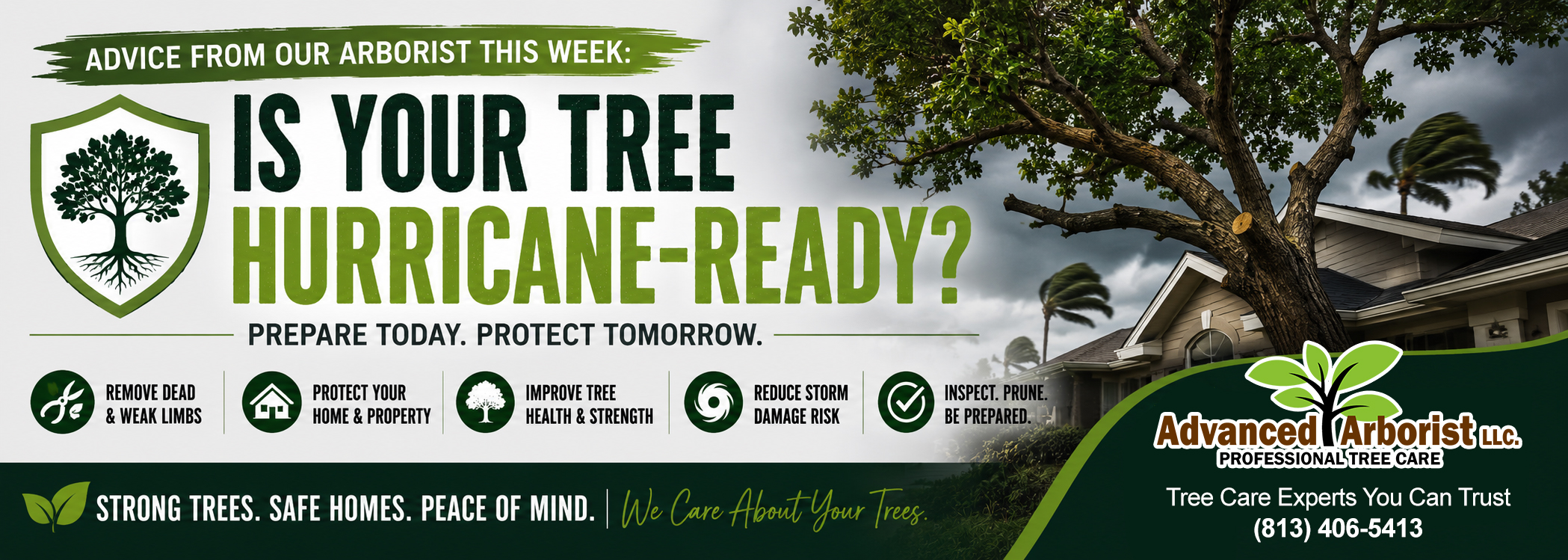
Hurricane season in Florida can bring strong winds, heavy rain, and flying debris that put your property at risk. While most homeowners focus on securing outdoor furniture and stocking emergency supplies, many overlook one of the biggest hazards—a poorly maintained tree.
At Advanced Arborist, we know that healthy, properly maintained trees are much more likely to withstand severe weather. Taking action before a storm arrives can reduce the risk of fallen limbs, property damage, and costly emergency tree removal.
Why Hurricane Preparation Starts with Your Trees
Strong winds expose hidden weaknesses in trees. Dead branches, diseased limbs, structural defects, and improper pruning can all increase the likelihood of failure during a hurricane.
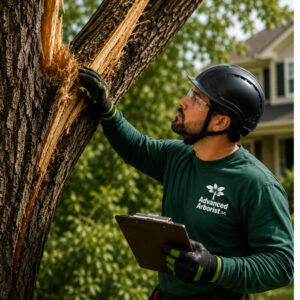 Common storm-related tree hazards include:
- Dead or hanging limbs
- Cracked or split trunks
- Trees leaning more than usual
- Weak branch unions
- Root damage
- Overgrown limbs extending over homes, driveways, or power lines
Having your trees professionally inspected before hurricane season allows potential problems to be identified and corrected before they become emergencies.
Five Ways to Prepare Your Trees for Hurricane Season
1. Remove Dead or Hazardous Limbs
Dead branches become dangerous projectiles during high winds. Removing them improves both safety and the overall health of the tree.
Professional pruning also reduces unnecessary weight throughout the canopy.
2. Never Top Your Trees
One of the biggest mistakes homeowners make is topping trees.
Topping removes large portions of the canopy and encourages weak, fast-growing shoots that are far more likely to break during future storms.
Instead, certified arborists use proper structural pruning techniques that improve stability while maintaining the tree’s natural shape.
3. Inspect Large Trees Near Structures
Large shade trees provide tremendous value but deserve regular inspections.
Pay special attention to trees located near:
- Homes
- Garages
- Pools
- Driveways
- Commercial buildings
- Parking areas
An experienced arborist can identify hidden defects that may not be visible to the average homeowner.
4. Check for Root Problems
Healthy roots are essential for storm resistance.
Warning signs include:
- Soil lifting around the base
- Mushrooms growing near roots
- Recent construction damage
- Exposed or damaged roots
- Poor drainage
Root issues often go unnoticed until severe weather causes tree failure.
5. Schedule Preventative Pruning Before Storms Arrive
The best time to prepare is long before a hurricane appears in the forecast.
Once a storm is approaching, tree companies quickly become booked with emergency calls. Scheduling preventative maintenance early helps ensure your property is ready when severe weather arrives.
Warning Signs Your Tree May Not Be Hurricane-Ready
Call a certified arborist if you notice:
- Dead branches throughout the canopy
- Large cracks in the trunk
- Hollow sections
- Leaning trees
- Branches rubbing together
- Fungus or decay
- Trees touching your roof
- Heavy limbs extending over your home
- Previous storm damage
These issues don’t always mean a tree must be removed, but they should be evaluated by a professional.
Why Professional Tree Care Matters
Improper pruning can actually make trees more dangerous.
A certified arborist understands:
- Tree biology
- Structural pruning techniques
- Risk assessment
- Disease identification
- Long-term tree health
- Hurricane-resistant canopy management
Professional maintenance helps reduce storm damage while preserving healthy trees whenever possible.
Hurricane Tree Tips for Florida Homeowners
Before hurricane season begins:
- Inspect all mature trees.
- Remove dead or damaged branches.
- Trim limbs away from roofs and structures.
- Remove hazardous trees before they become emergencies.
- Keep young trees properly pruned to develop strong structure.
- Schedule an annual tree health evaluation.
These simple steps can significantly reduce the likelihood of storm-related tree failures.
Why Choose Advanced Arborist?
Advanced Arborist provides expert tree care throughout the Tampa Bay area with a focus on safety, tree preservation, and professional service.
Our services include:
- Tree risk assessments
- Tree trimming and pruning
- Hazardous tree removal
- Storm preparation
- Emergency tree services
- Stump grinding
- Arborist consultations
Our certified professionals evaluate every tree individually and recommend the safest, most cost-effective solution for your property.
Schedule Your Free Tree Evaluation Today
At Advanced Arborist LLC, our certified arborists provide professional tree evaluations and expert recommendations tailored to your property’s needs. Whether you have concerns about a single tree or want a complete property assessment, we’re here to help.
Don’t wait until storm damage occurs. Take action now and ensure your trees are healthy, safe, and prepared for the season ahead.
Contact Advanced Arborist LLC today for a free evaluation of your tree care needs and let our certified professionals help protect your property.

 Call (813) 406-5413 today for a free tree health evaluation and storm-prep consultation.
 Visit AdvancedArboristLLC.com to schedule your service online.
Frequently Asked Questions
When should I prune trees before hurricane season?
The ideal time is several months before peak hurricane activity. Regular maintenance throughout the year is even better than waiting until storms are forecast.
Can healthy trees still fall during hurricanes?
Yes. Even healthy trees can fail in extreme weather, but proper pruning, structural maintenance, and routine inspections significantly reduce the risk.
Should I remove every tree close to my house?
No. Many mature trees can safely remain near structures when they are healthy and properly maintained. A certified arborist can determine whether pruning, cabling, or removal is the best solution.
Does trimming a tree make it stronger?
When done correctly, yes. Structural pruning removes weak, poorly attached, or damaged branches and improves wind resistance. Improper practices like topping, however, weaken trees and increase storm risk.